About The Book
About The Book
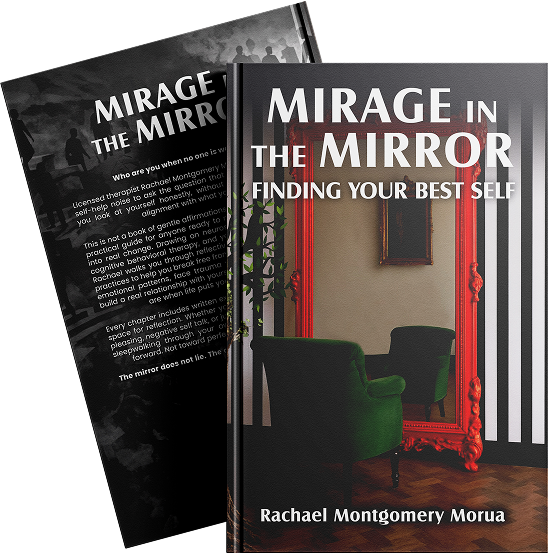
MIRAGE In The MIRROR Finding Your Best Self
Self-discovery is often described as a destination, but Mirage in the Mirror presents it as an ongoing practice. The book explores how people develop patterns of thinking, feeling, and responding to life while offering practical tools to become more intentional about those patterns.
Beginning with mindfulness, readers learn how to step out of autopilot and reconnect with the present moment. From there, the book gradually moves into deeper territory, examining self-judgment, emotional awareness, personal values, internal struggles, relationships, perspective, and emotional resilience.
One of the book’s strengths is its ability to connect psychological concepts with everyday experiences. Complex topics such as nervous system regulation, emotional responses, attachment, and personal growth are presented in a way that feels accessible and relatable. Readers are encouraged to reflect on their own experiences rather than passively consume information.
At its heart, Mirage in the Mirror is about clarity. It challenges readers to examine themselves honestly, take responsibility for their growth, and build a life that aligns with their values. The result is a thoughtful guide for anyone seeking greater self-awareness, emotional balance, and a stronger sense of purpose.
Why Read it?
MIRAGE In The MIRROR Finding Your Best Self
Most personal development books focus on changing behavior. Mirage in the Mirror focuses on understanding the person behind the behavior.
This book offers more than inspiration. It provides practical tools for developing mindfulness, emotional awareness, self-compassion, and healthier relationships. Readers are encouraged to explore their values, understand their emotional responses, and identify the habits that may be limiting personal growth.
Whether you are navigating stress, relationship challenges, self-doubt, emotional overwhelm, or simply seeking a stronger understanding of yourself, the lessons inside offer meaningful guidance. The exercises transform reflection into action, making the learning process deeply personal and relevant.
What makes this book especially valuable is its balance of compassion and accountability. It encourages readers to acknowledge their struggles without becoming defined by them. Instead, it offers a path toward greater clarity, resilience, and self-respect.
If you are ready to move beyond autopilot, strengthen your emotional well-being, and build a more intentional relationship with yourself, Mirage in the Mirror provides a thoughtful place to begin.